Launch offer — valid today only

📄 Digital book in PDF · read it on your phone or print it

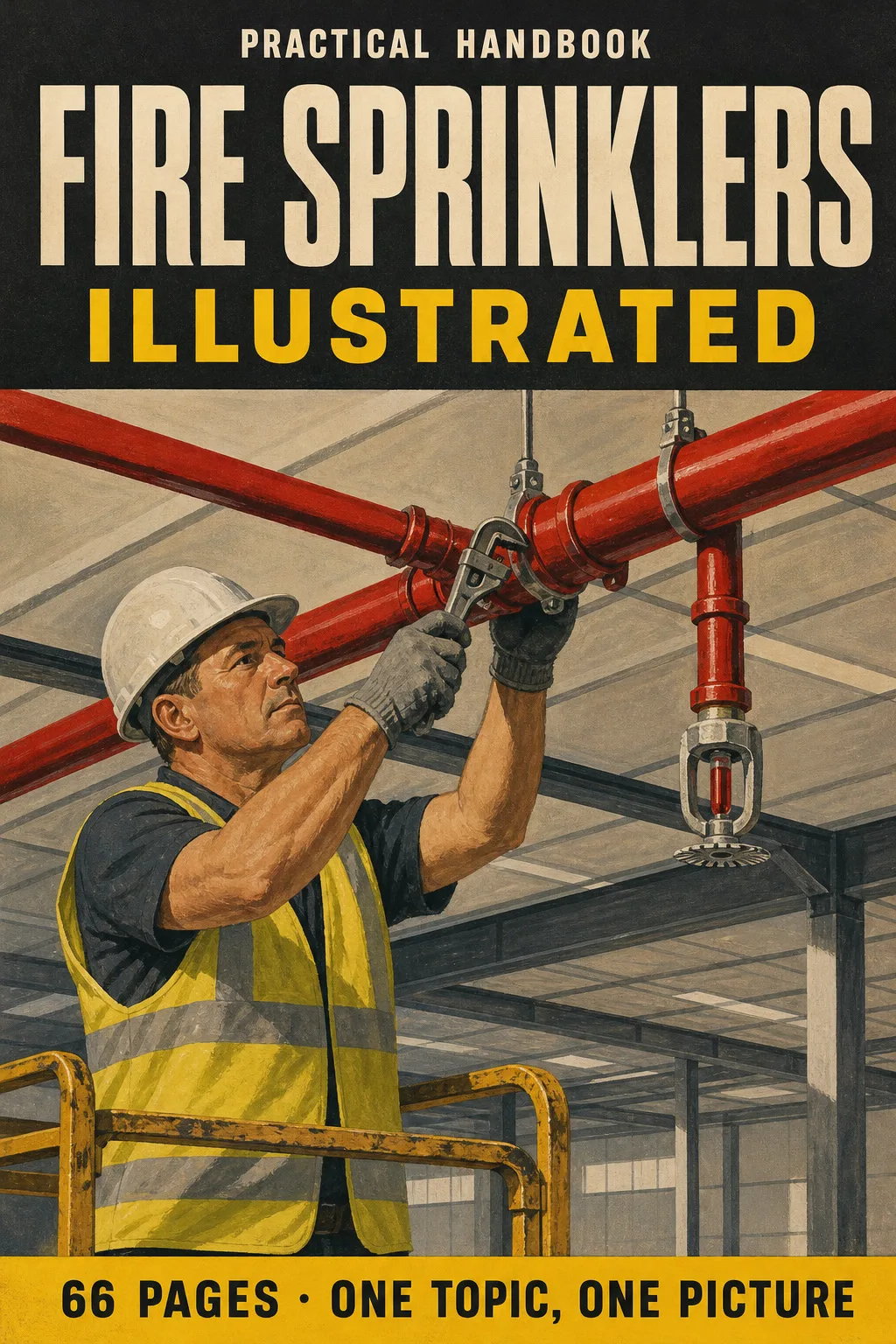
Fire Sprinklers and BS EN 12845 in Drawings The Whole System in One Sequence, Tank to Head

For sprinkler fitters revising for IQ Level 2, an LPS 1048 assessment or BS 9251 domestic work. Wet and dry systems, glass bulbs, hazard classes, water supplies, alarm valves, pipework, testing and maintenance: every topic has its own page, the drawing first, then the numbers. 66 illustrated pages.

START STUDYING THIS WAY

🔒 Secure checkout · PDF by email · 30-day guarantee

Every topic, its own pageThe whole system drawn as one path, with the explanation alongside
66 illustrated pages8 parts, from the water supply to the final site checklist
Up-to-date sourcesBS EN 12845, BS 9251 and the LPC Rules
PDF by emailFormat

Look Inside the Book

Every page has one large drawing and a box with the numbers you need to know:

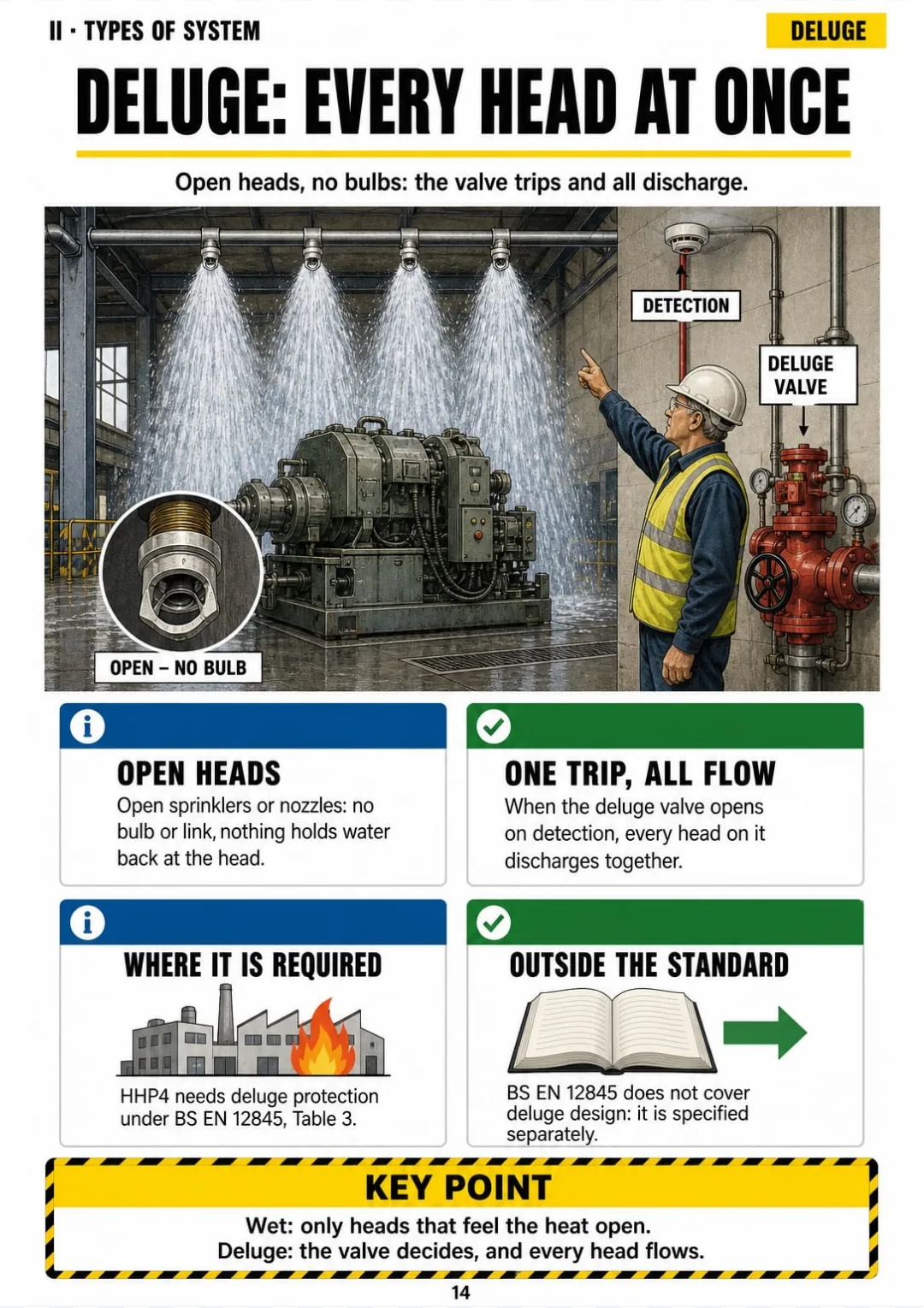
Deluge: open heads, all discharge together; HHP4 needs it, design outside BS EN 12845.
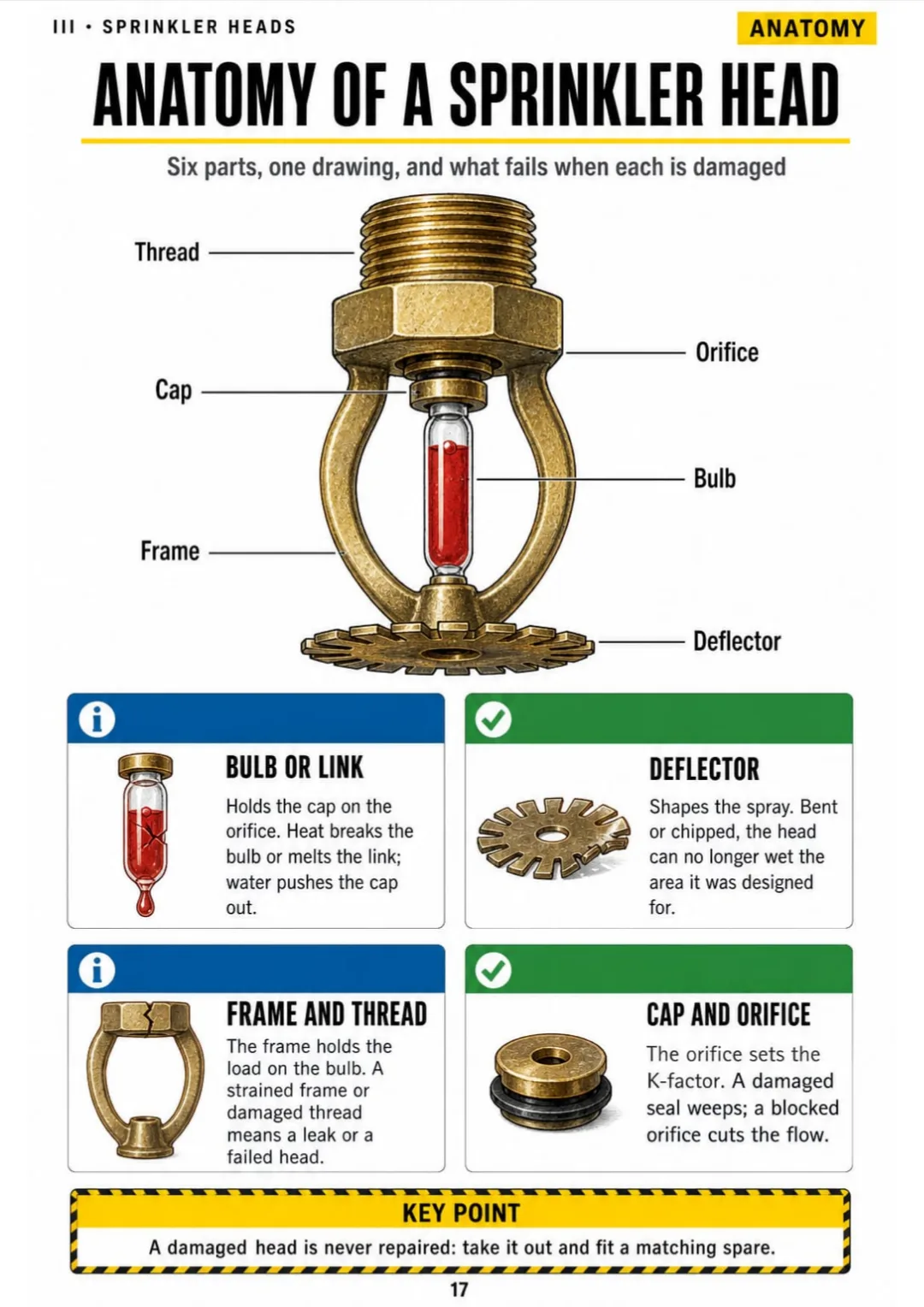
Frame, orifice, cap, bulb, deflector, thread: every part labelled on one head.
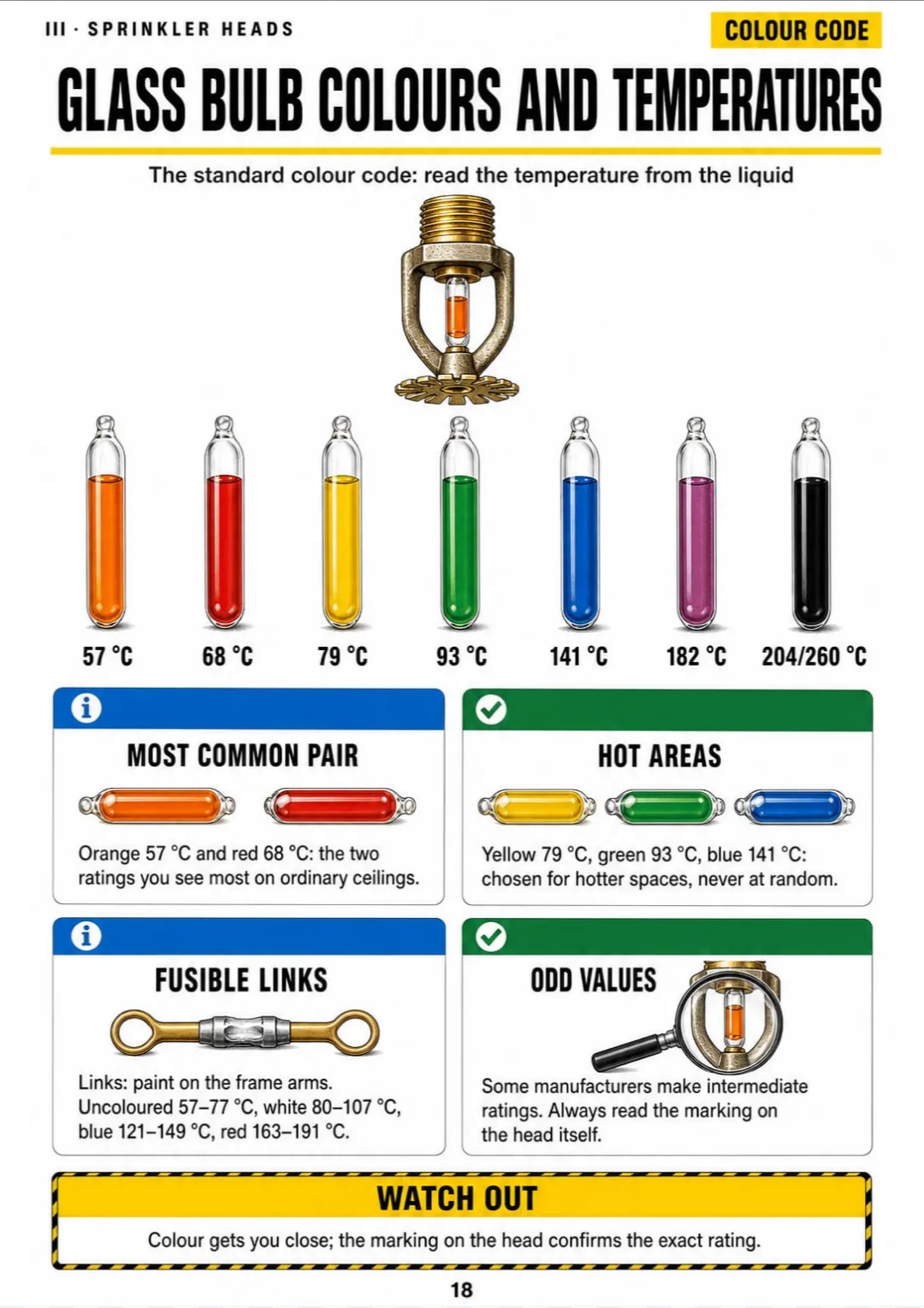
Orange 57 °C · red 68 °C · yellow 79 °C · green 93 °C · blue 141 °C · mauve 182 °C · black 204/260 °C.
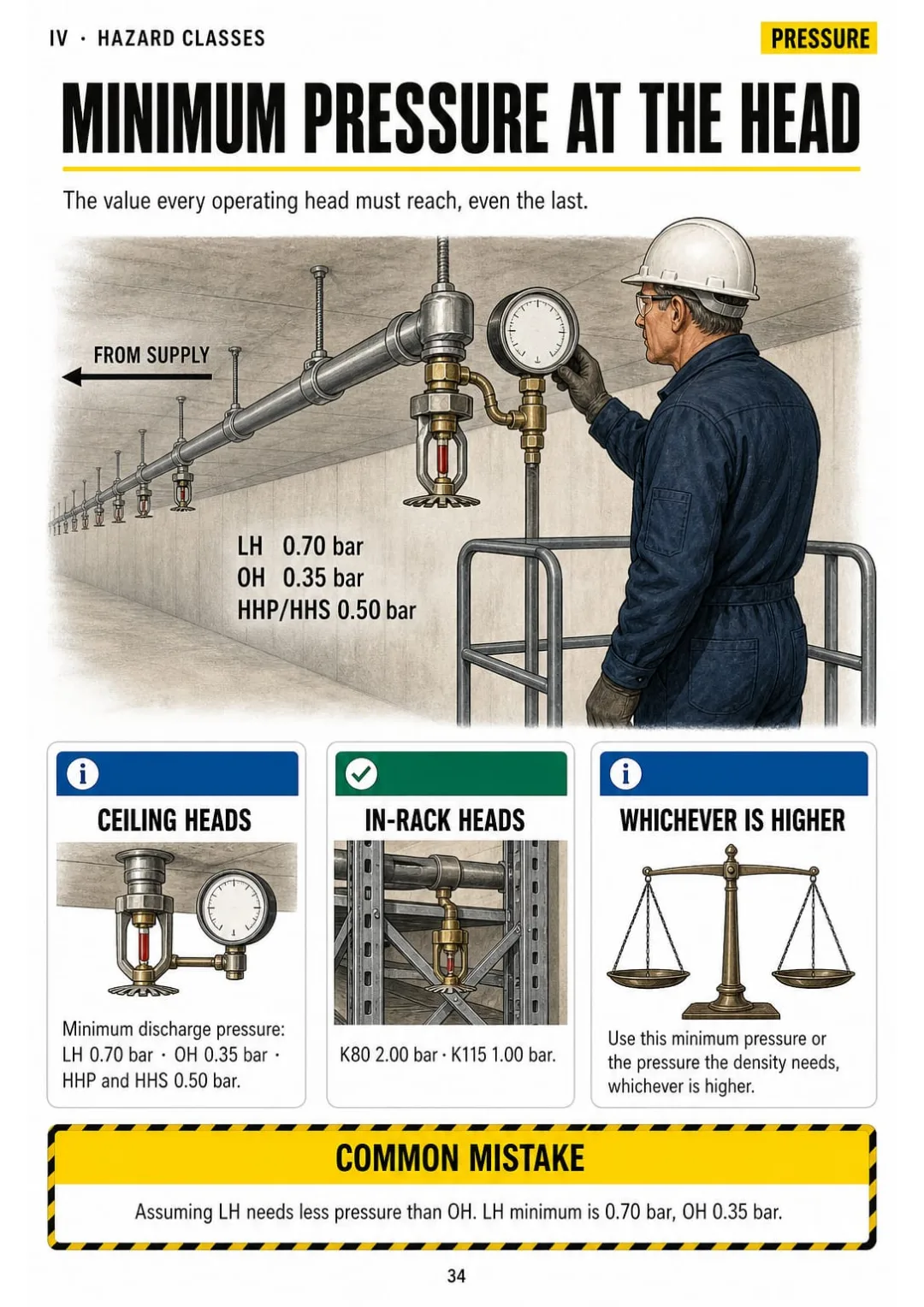
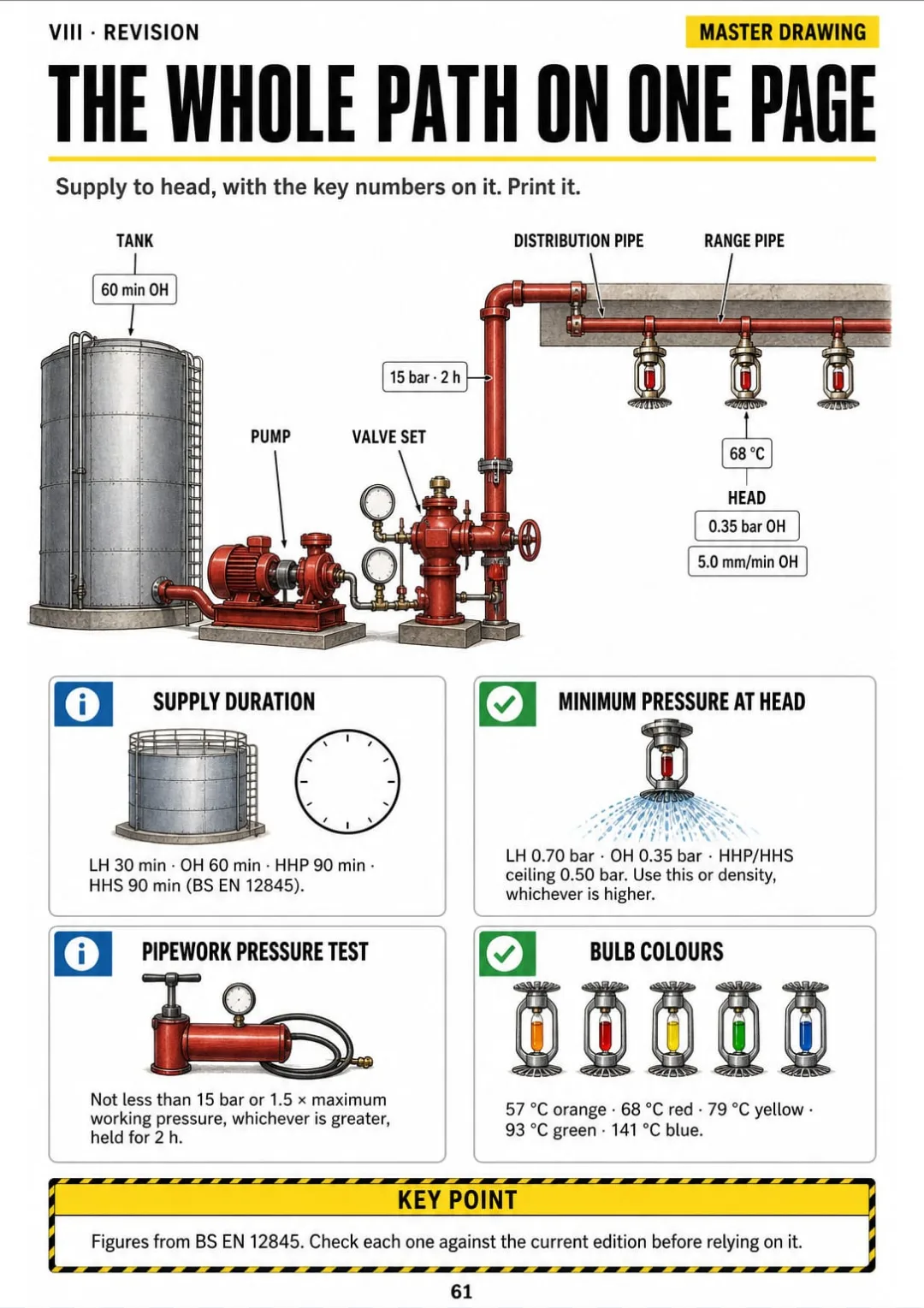
Minimum at any operating head: LH 0.70 · OH 0.35 · HHP/HHS 0.50 bar
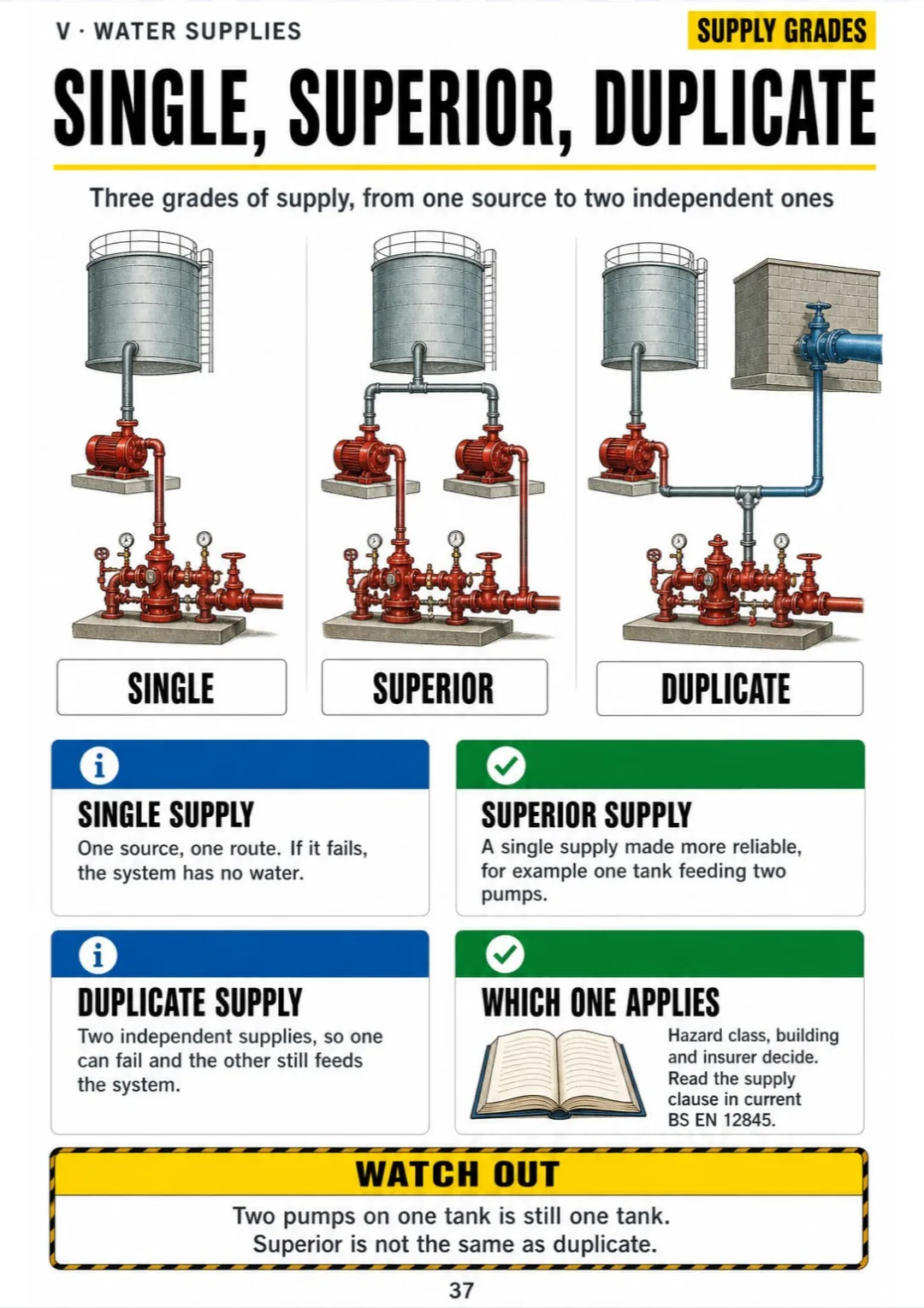
Single, superior and duplicate supplies drawn side by side, checked against BS EN 12845.
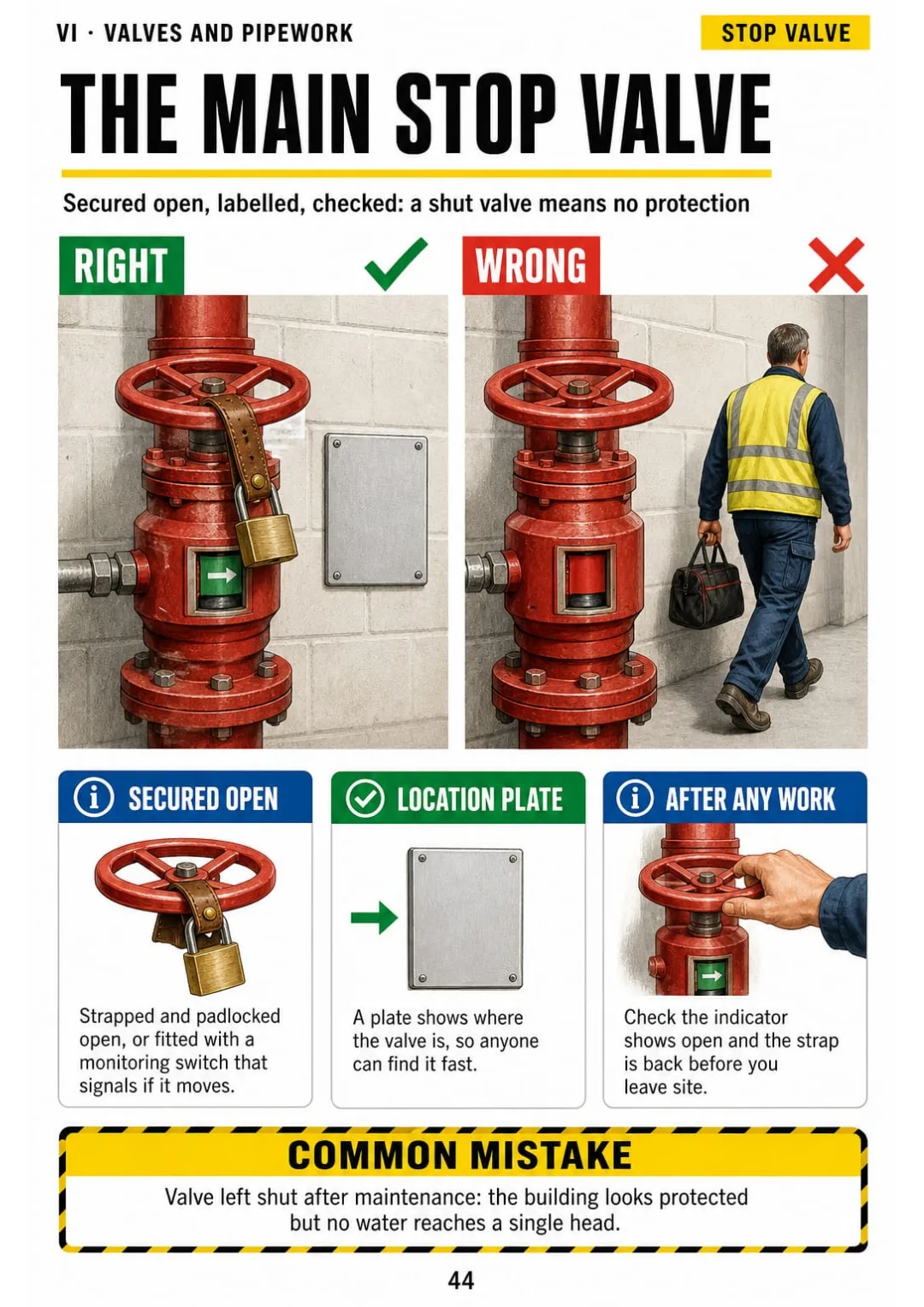
Main stop valve: strapped and padlocked open, or monitored, with a location plate
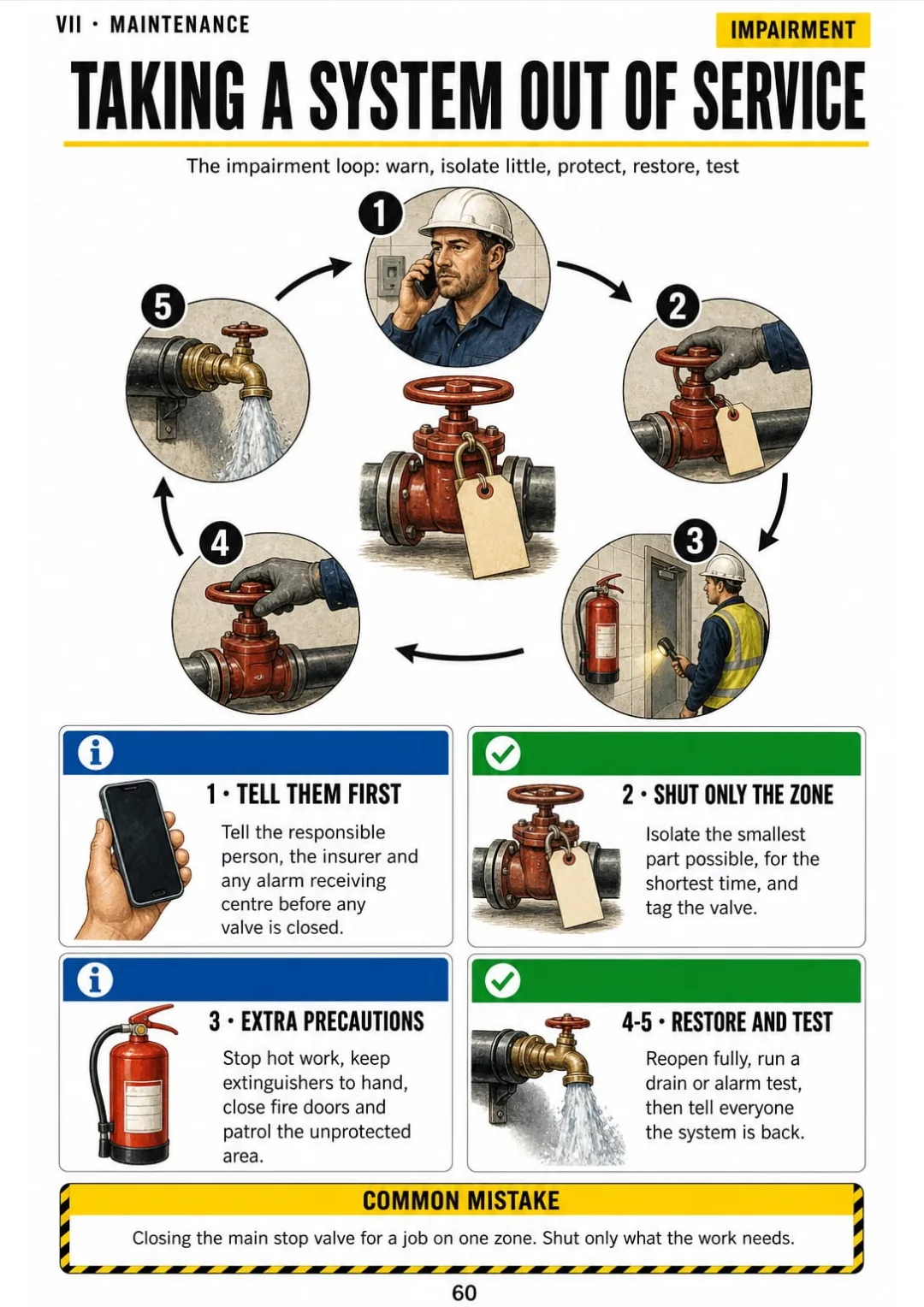
Impairment loop: tell the responsible person and insurer, shut only the zone, protect, restore and test.
Tank to head on one drawing: 60 min OH, 0.35 bar at the head, 15 bar for 2 h.

Swipe to see more →

These are real pages from the book. The table of contents is the full one: 8 parts and 62 topics.

The Problem Isn't You. It's How It Was Explained to You.

You're up a ladder in a warehouse, swapping a damaged head. The spare in the cabinet has a yellow bulb. Every other head on that run is red.

Is yellow hotter or cooler, and by how much? In the standard it's a table inside a clause: seven colours and seven temperatures, with nothing to tie them together.

Orange 57 °C · red 68 °C · yellow 79 °C · green 93 °C · blue 141 °C · mauve 182 °C · black 204/260 °C.

In the book the bulbs are drawn in a row, coolest to hottest: orange 57 °C, red 68 °C, yellow 79 °C, green 93 °C, then blue, mauve and black. Each number is printed next to its bulb.

Dry pipe systems, the wet alarm valve set, minimum pressure at the head, tank size and taking a system out of service work the same way: each one has its own page.

You see the row, you know the spare is wrong for that run, and you fit the right one without going back to the standard.

COMPARE FOR YOURSELF

The Same Topic, Two Ways to Study It

THIS
  • The standard: line after line
  • The parts of a head explained in words only
  • You go into the assessment still unsure
A sprinkler comprises a body or frame incorporating a threaded inlet connection, the dimensions of which shall be compatible with the fitting into which it is installed, and an orifice through which water is discharged upon operation. The orifice is held closed by a cap retained by a heat-responsive element, typically a frangible glass bulb, which on reaching its nominal operating temperature releases the cap, whereupon the discharge strikes the deflector, the configuration of which determines the distribution pattern.
FOR THIS
  • The sprinkler head in one drawing
  • Every part labelled in a box
  • You see it and you get it
Frame, orifice, cap, bulb, deflector, thread: every part labelled on one head.
CONTENTS

Take a Look at the 8 Parts and 62 Topics

The system as one path, types of system, sprinkler heads, hazard classes and design, water supplies and pumps, valves, alarms and pipework, testing and maintenance, and revision: 66 pages, all illustrated.

IThe System as One Path · pp. 5-9
  1. The Path: Water Supply to Head
  2. How a Sprinkler Actually Opens
  3. Which Standard Covers Which Building
  4. The Words the Assessor Uses
  5. Reading the Standard Without Drowning
IITypes of System · pp. 10-16
  1. Wet Pipe System
  2. Dry Pipe System
  3. Alternate System
  4. Pre-Action Systems: Type A and Type B
  5. Deluge Systems
  6. Tail-End Systems
  7. Choosing the System at a Glance
IIISprinkler Heads · pp. 17-25
  1. Anatomy of a Head
  2. Glass Bulb Colours and Temperatures
  3. Choosing the Temperature Rating
  4. Pendent, Upright and Sidewall
  5. Concealed and Recessed Heads
  6. Standard and Fast Response
  7. K-Factor: Flow from Pressure
  8. Residential and Domestic Heads
  9. Spare Heads and the Spanner
IVHazard Classes and Design Basics · pp. 26-35
  1. Hazard Classes: the Big Picture
  2. Light Hazard (LH)
  3. Ordinary Hazard OH1 to OH4
  4. High Hazard Process (HHP)
  5. High Hazard Storage (HHS)
  6. Density and Area of Operation
  7. Spacing and Area per Head
  8. Distance from Walls
  9. Minimum Pressure at the Head
  10. Pre-Calculated vs Fully Hydraulically Calculated
VWater Supplies and Pumps · pp. 36-42
  1. Types of Water Supply
  2. Single, Superior and Duplicate Supplies
  3. Supply Duration and Tank Size
  4. Sprinkler Pump Sets
  5. The Pump Curve in One Drawing
  6. Domestic Supplies under BS 9251
  7. Backflow and the Water Undertaker
VIValves, Alarms and Pipework · pp. 43-52
  1. The Wet Alarm Valve Set
  2. The Main Stop Valve
  3. Water Motor Alarm Gong
  4. Flow Switches and Monitoring
  5. The Dry Pipe Valve and Accelerator
  6. Subsidiary Valves and Zone Valves
  7. Pipe Materials and Joints
  8. Hangers and Supports
  9. Deflector Position and Obstructions
  10. Drainage and Slope of Pipework
VIITesting, Commissioning and Maintenance · pp. 53-60
  1. Flushing Before Testing
  2. Hydrostatic Pressure Test
  3. Air Test on Dry Pipework
  4. Testing a Domestic or Residential System
  5. Commissioning and Handover
  6. Weekly Checks
  7. Quarterly, Half-Yearly and Annual Checks
  8. Taking a System Out of Service Safely
VIIIRevision and Site Checks · pp. 61-66
  1. The Whole Path on One Page
  2. Numbers to Have to Hand
  3. Pairs That Get Mixed Up
  4. Most Frequent Installation Faults
  5. Explaining It to the Assessor
  6. Final Site Checklist

One Page, One Topic, All Clear

Think of it this way:

It's test day. The installation is full, the gauge is reading, and the client's engineer asks you what the test pressure is and how long it has to hold.

You open the page for the hydrostatic test. The pipework, the gauge and the test numbers are drawn on it, with the steps in order next to them.

Single, superior and duplicate supplies drawn side by side, checked against BS EN 12845.

The same goes for the wet alarm valve set, glass bulb colours, hazard classes, minimum pressure at the head and tank size: each one on its own page.

Fire Sprinklers Illustrated is 8 parts and 62 topics, all drawn, with the numbers to have to hand, the pairs that get mixed up and a final site checklist at the end.

What you see drawn, you don't have to memorize.

What's Inside Fire Sprinklers Illustrated:

Ipp. 5-9

The System as One Path

The path from water supply to head, how a sprinkler opens, which standard covers which building, the words the assessor uses and how to read the standard.

IIpp. 10-16

Types of System

Wet, dry, alternate, pre-action Type A and B, deluge and tail-end systems, plus a page to choose between them at a glance.

IIIpp. 17-25

Sprinkler Heads

Anatomy of a head, glass bulb colours and temperatures, ratings, pendent, upright and sidewall, concealed heads, response, K-factor, residential heads and spares.

IVpp. 26-35

Hazard Classes and Design Basics

Hazard classes from LH to OH1–OH4, HHP and HHS, density and area of operation, spacing, distance from walls, minimum pressure and pre-calculated vs hydraulically calculated.

Vpp. 36-42

Water Supplies and Pumps

Types of supply, single, superior and duplicate, duration and tank size, pump sets, the pump curve, domestic supplies under BS 9251 and backflow.

VIpp. 43-52

Valves, Alarms and Pipework

The wet alarm valve set, main stop valve, gong, flow switches, dry pipe valve and accelerator, zone valves, pipe and joints, hangers, deflector position and drainage.

VIIpp. 53-60

Testing, Commissioning and Maintenance

Flushing, hydrostatic and air tests, domestic system testing, commissioning and handover, weekly to annual checks and taking a system out of service.

VIIIpp. 61-66

Revision and Site Checks

The whole path on one page, numbers to have to hand, pairs that get mixed up, frequent installation faults, explaining it to the assessor and a final site checklist.

At the end of the book: Numbers to have to hand, pairs that get mixed up and a final site checklist.
Plus: 2 Free Books

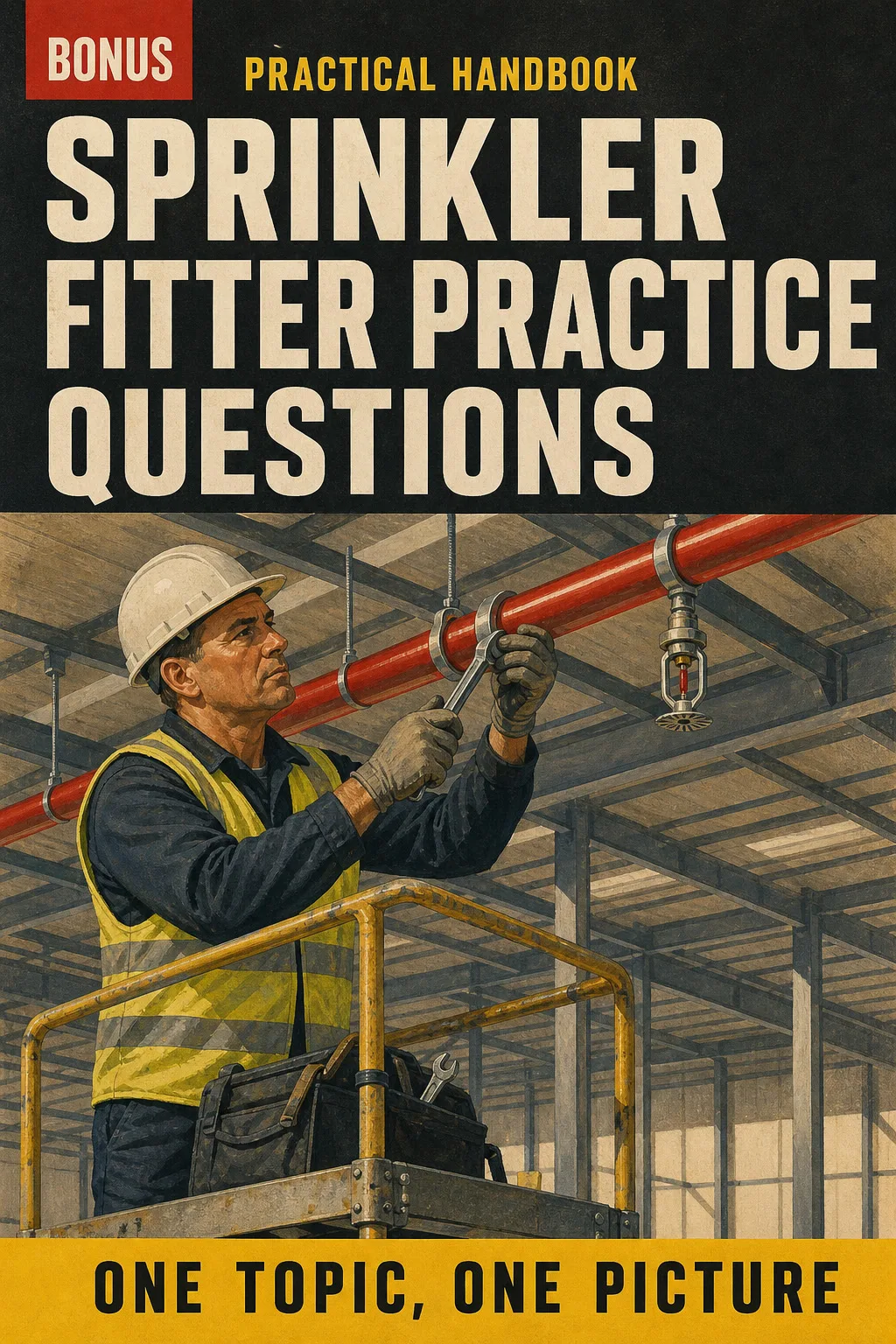
Sprinkler Fitter Practice Questions

BONUS 1: «Sprinkler Fitter Practice Questions»

Value on its own: US$ 17.90

Exam-style questions on systems, heads, hazard classes and testing, each with the answer explained, so you find the gaps before the assessor does.

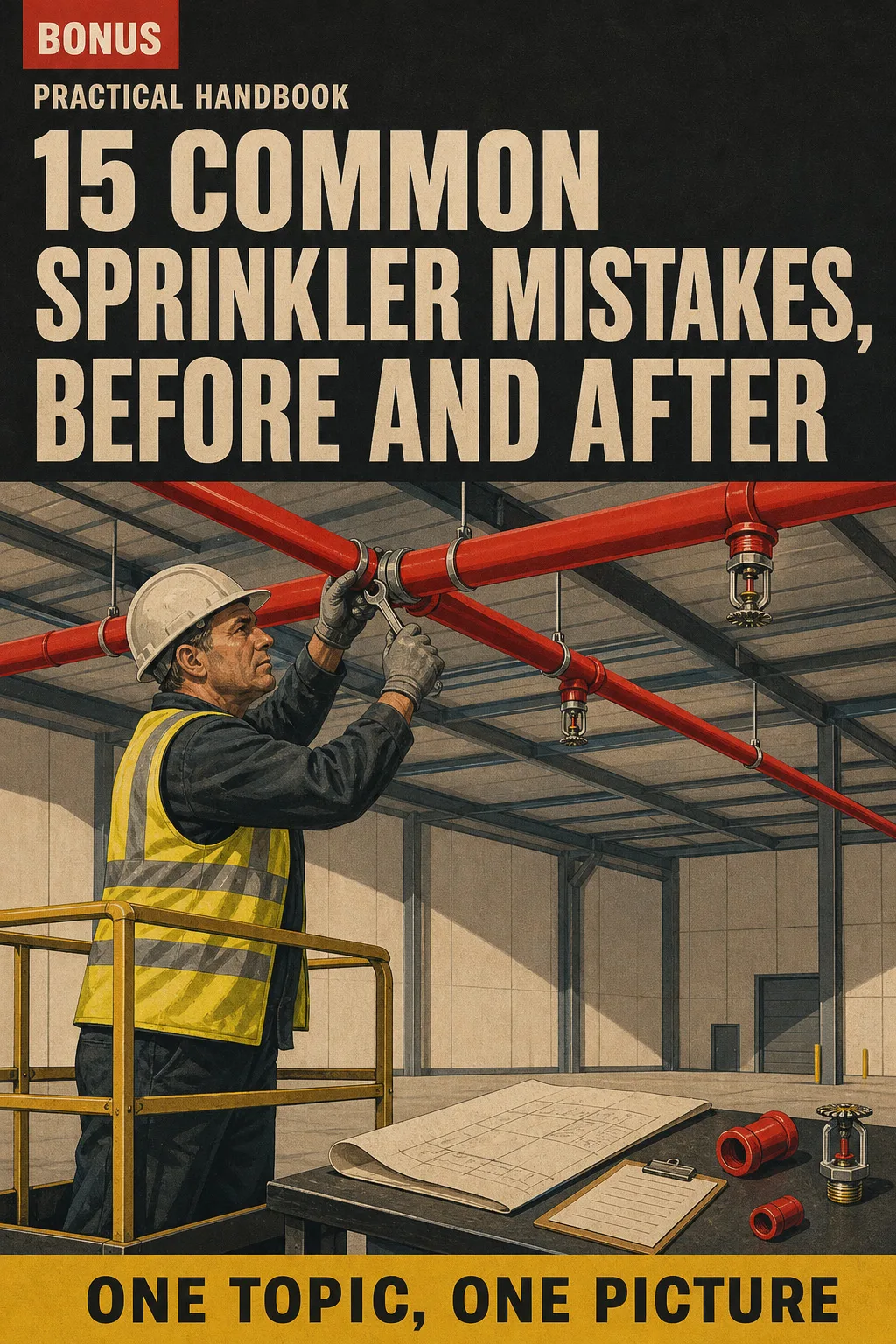
15 Common Sprinkler Mistakes, Before and After

BONUS 2: «15 Common Sprinkler Mistakes, Before and After»

Value on its own: US$ 14.90

The most frequent installation and testing errors, each drawn wrong and then right, so you can spot them on site at a glance.

Fire Sprinklers Illustrated with 2 Free Books

  • Fire Sprinklers Illustrated: 66 illustrated pagesUS$ 63
  • BONUS 1: Sprinkler Fitter Practice QuestionsUS$ 17.90
  • BONUS 2: 15 Common Sprinkler Mistakes, Before and AfterUS$ 14.90
  • High-resolution PDF to printIncluded
Total value US$ 95.80
YOUR PRICE:
US$ 27
You save US$ 68.80
YES, I WANT FIRE SPRINKLERS ILLUSTRATED FOR US$ 27

📄 This is a digital PDF book sent to your email: nothing is printed or shipped.

Secure purchaseEncrypted payment30-day guarantee

PDF by email: We email you Fire Sprinklers Illustrated as a PDF, together with the two free books. It's a single payment: no installments, no extra charges.

Who This Book Is For

You're training for IQ Level 2

You're training for IQ Level 2

The whole system in one order, from supply to head, so every module of the course has a page to come back to.

Your competence assessment is coming

Your competence assessment is coming

What you already do on site, with the reasons and the numbers drawn, so you can explain it calmly in front of the assessor.

You already fit or maintain systems

You already fit or maintain systems

A printable book to keep in the van: bulb ratings, pressures, tank sizes and the check intervals, found in seconds.

Everything You Get Today

US$ 95.80US$ 27
YES, I WANT FIRE SPRINKLERS ILLUSTRATED FOR US$ 27

📄 This is a digital PDF book sent to your email: nothing is printed or shipped.

30DAYS
GUARANTEE

30-Day Guarantee

Try Fire Sprinklers Illustrated for 30 days, bonus books included.

We refund everything if the file won't open, if the book isn't what you see here, if you were charged twice or if the email doesn't arrive. Just email us.

You pay once. No subscriptions.

Frequently Asked Questions

Is it for me if I've been fitting sprinklers for years?

Yes. It doesn't treat you as a beginner: it puts what you already do in order, from the supply to the head, and draws the reason behind each rule.

Where does the content come from?

From the UK standards, not NFPA: BS EN 12845:2015+A1:2019 and BS 9251:2021 (BSI), with the LPC Rules as reference. Each reference is marked so you can check it against the current version.

Is it official material?

No. It's an independent study book, not published or endorsed by BSI, LPCB, BAFSA, IQ or any awarding body. It doesn't give you a certificate or count towards any qualification: it's for revising what you'll be assessed on.

Does it replace the course or the training?

No. It's for revising alongside your course, your site experience and the standards themselves. It doesn't replace any of them, and no book can guarantee you pass an assessment: it helps you get the order and the numbers straight before you're asked.

Are the practice questions the ones in the exam?

No. They're written for this book to help you find the gaps. They aren't official questions from any qualification or assessment.

When and how does it arrive?

The book and the two free books arrive as PDFs by email, to the address you enter when you pay.

Do I have to pay every month?

No. It's a one-off payment.

Can I have it on paper?

We don't post a printed copy, but the PDF is ready to print: print the whole book or just the pages you need and keep them in the van or take them on site.

How does the refund work?

You have 30 days. We refund everything if the file won't open, if the book isn't what you see on this page, if you were charged twice or if the email doesn't arrive: just email us.

Before You Close This Page

No more rereading with nothing sticking.

Bulb colours and temperatures: you see them drawn, and that's it.

You walk into the assessment knowing where everything is.

Drawings make studying faster.

The book is right below.

One-time payment: US$ 27 · Guarantee: 30 days · PDF by email

YES, I WANT FIRE SPRINKLERS ILLUSTRATED FOR US$ 27

📄 This is a digital PDF book sent to your email: nothing is printed or shipped.